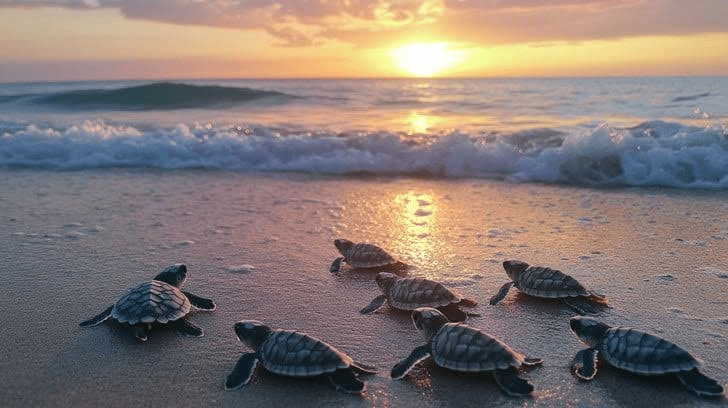
Sri Lanka’s south coast is nesting ground for five of the world’s seven sea turtle species: the green, hawksbill, olive ridley, loggerhead, and leatherback. Sea turtles in Mirissa aren’t a novelty laid on for visitors. They’ve been coming ashore on this stretch of coast for far longer than any hotel or villa has existed here, and they’ll keep doing it long after, provided the beach stays intact enough to let them.
Five Species, and How to Tell Them Apart
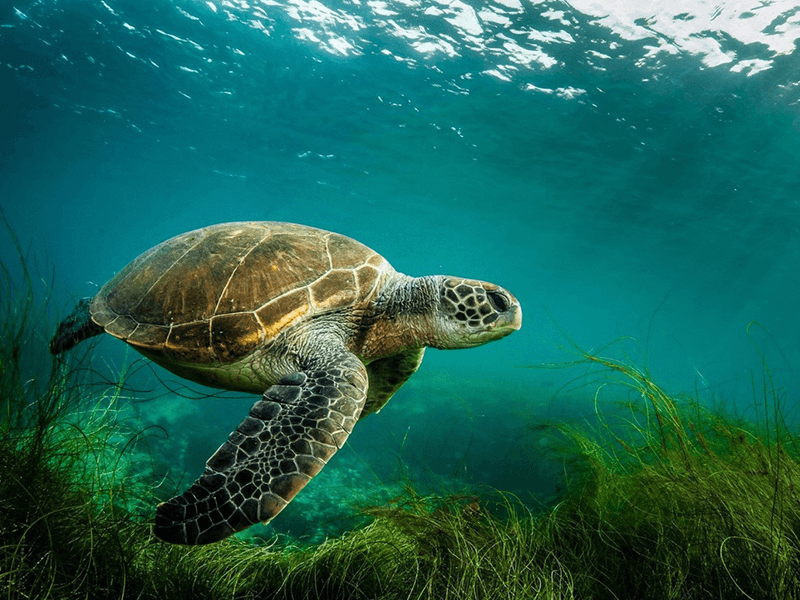
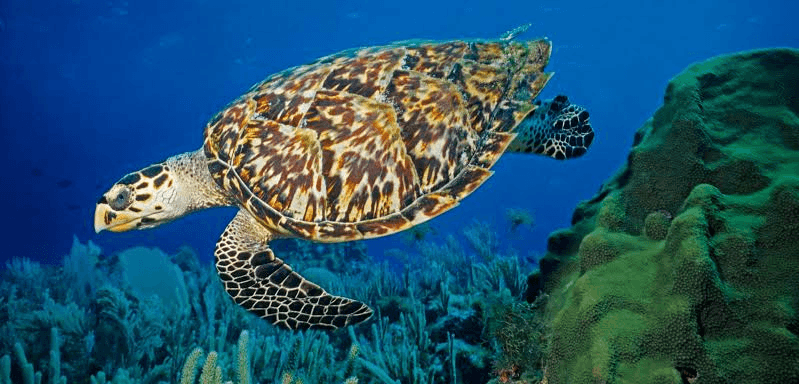
The green turtle is one of the larger species in these waters, named for the colour of its fat rather than its shell, and it’s mostly herbivorous as an adult, grazing on seagrass and algae rather than hunting. The hawksbill is smaller and more delicate-looking, with a narrow, curved beak and a strikingly patterned shell, the same shell that made it a target for the tortoiseshell trade for centuries and pushed it toward critical endangerment.
The olive ridley is the smallest of the five and the one most commonly seen nesting on this stretch of coast, identifiable by its slightly heart-shaped shell and an olive-grey colouring that gives it its name. The loggerhead carries an oversized head and powerful jaws built for crushing shellfish and hard-bodied prey that softer-mouthed turtles can’t manage, while the leatherback, the largest turtle on Earth and one of the largest reptiles alive, has no hard shell at all, just a ridged, leathery carapace that lets it dive deeper and travel further than any of the others, sometimes thousands of kilometres between feeding and nesting grounds. Leatherbacks are the rarest of the five in Sri Lankan waters, so a sighting is worth noting.
Nesting, and the Journey Back to the Same Beach
One of the more remarkable facts about sea turtles has nothing to do with how they look. Adult females return to nest on the very beach where they themselves hatched, sometimes decades earlier, navigating back across open ocean to a specific stretch of sand. That homing behaviour starts once a female reaches around twenty-five years old and continues for as long as her breeding years last.
Nesting happens year-round in Sri Lanka, but activity along the south coast picks up between November and April, when calmer seas and warmer sand make conditions more favourable. A nesting turtle comes ashore at night, digs a chamber in the sand with her back flippers, lays a clutch that can run anywhere from eighty to over a hundred eggs depending on the species, then covers the nest and returns to the sea before sunrise. The whole process takes an hour or more and asks for complete stillness from anyone nearby, since a turtle that senses movement or light too early in the process will often abandon the attempt entirely and try again another night.
Sea Turtles in Mirissa: The Conservation Work Behind Them
Mirissa is home to one of Sri Lanka’s longest-running turtle protection efforts, a Coast Guard-led conservation project based at Mirissa beach that focuses on preventing egg poaching, protecting nesting turtles, and raising hatchlings in a monitored hatchery before releasing them into the sea. It’s one of several such sites now running along the island’s western and southern coasts.
Further along the coast, the Rekawa Turtle Conservation Project takes a similar approach on a beach considered one of the most important nesting sites on the island. The best time to see a female actually laying her eggs there runs from April to July, when five to fifteen turtles might come ashore in a single night, compared to as few as one or two during the quieter months between October and January.
The Threats They’re Up Against
Every one of the five species found here is classified as endangered or critically endangered. Coastal development has eaten into nesting beaches over the decades, reducing the stretches of undisturbed sand available for a female to choose from. Plastic pollution and discarded fishing gear injure or kill turtles that mistake debris for food or become entangled in nets, and egg poaching, still a problem in parts of the island despite decades of conservation work, remains one of the most direct threats to hatchling numbers. Light pollution from coastal development adds another layer of difficulty, confusing both nesting females and hatchlings that rely on natural light to find the sea. As few as one in a thousand hatchlings is thought to survive to adulthood, which makes every protected nest and every successful hatch count for more than the number alone suggests.
Watching Responsibly
A nesting turtle that senses disturbance will abandon the process and return to the sea without laying her eggs at all, so the usual guidance is to keep well back, avoid white light or flash photography, and let a guide or conservation officer manage how close anyone gets. The same goes for hatchlings making their way to the water: they navigate by natural light reflecting off the sea, and even a torch or a phone screen nearby can send an entire nest of them the wrong way, straight inland instead of out to sea.
Turtles at Your Doorstep
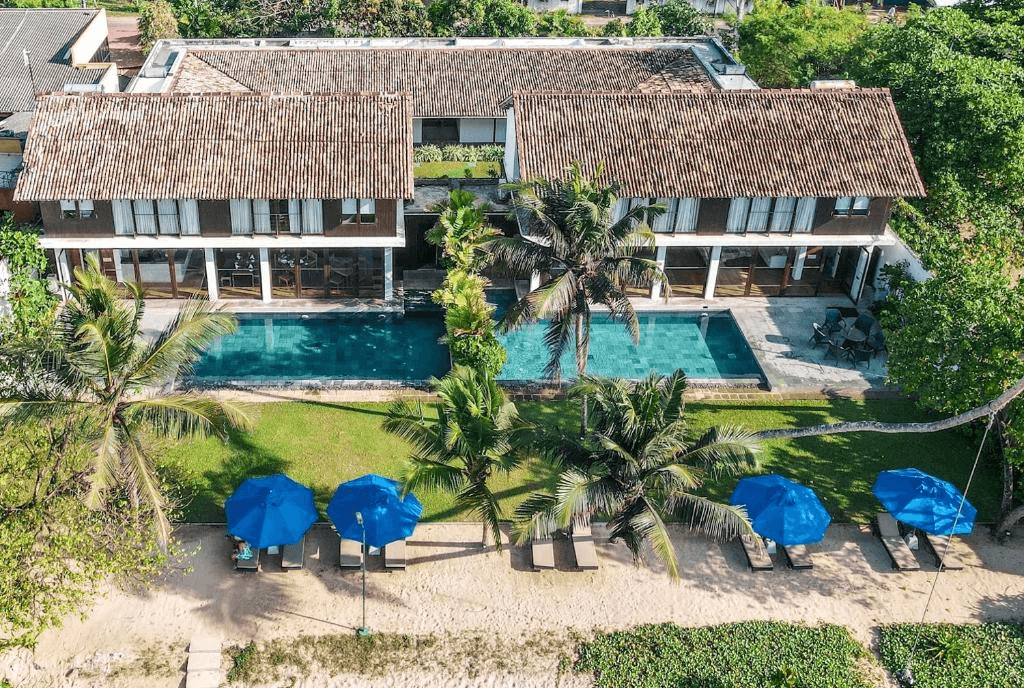
Staying somewhere with sea turtles in Mirissa nesting on its own stretch of beach is a different kind of proximity to wildlife than boarding a boat for it. At Ubuntu Beach Villas, direct beach access means that sand is right outside, and Reveal can arrange a visit to the Rekawa conservation site for guests who want a closer, guided look at the work being done to protect these species.
Ubuntu isn’t the only one of Reveal’s Mirissa properties within reach of this coastline. Lantern Boutique Hotel and The Beach House both sit along the same general stretch, each offering their own version of a stay built around this coast, from Lantern’s more intimate beachfront setting to The Beach House’s larger, group-friendly villa.
Browse beachfront villas in Mirissa, explore current offers, or contact Reveal the Collection for help planning a stay along this stretch of turtle-nesting coast. Few mornings compare to walking out onto the sand and knowing what’s happened there overnight, entirely undisturbed.